

In the Eskipazar region of the Turkish province of Karabük, the ancient city of Adrianopolis has once again surprised archaeologists. This time, the discovery has the discreet brilliance of ancient mosaics: a reception room decorated with mosaics which, after centuries spent in secrecy, demonstrates a sophistication comparable to that already found in the Black Sea region. Excavations carried out by Dr Ersin Çelikbaş, associate professor at Karabük University, have uncovered a space that appears to have been part of a 4th-century AD palace complex.
For Çelikbaş and his team, this discovery has special significance. The combination of stratigraphy, construction techniques and mosaic style allows the building to be attributed to a crucial moment at the end of the Roman Empire, when the local elite continued to build, combining tradition and cosmopolitanism. ‘The discovery of the remains of this palace in Adrianople has aroused great enthusiasm in us, both for the Black Sea region and for the archaeology of Anatolia,’ the researcher explained to the Andalou agency.
As archaeologists continue their excavations, details of the room are beginning to emerge. The location, the remains of the walls and the quality of the floor allow us to identify this space as a central venue for ceremonies or official meetings. Each new mosaic provides clues about daily life, aesthetic aspirations and political power in the ancient enclave.
Beauty, symbolism and technique
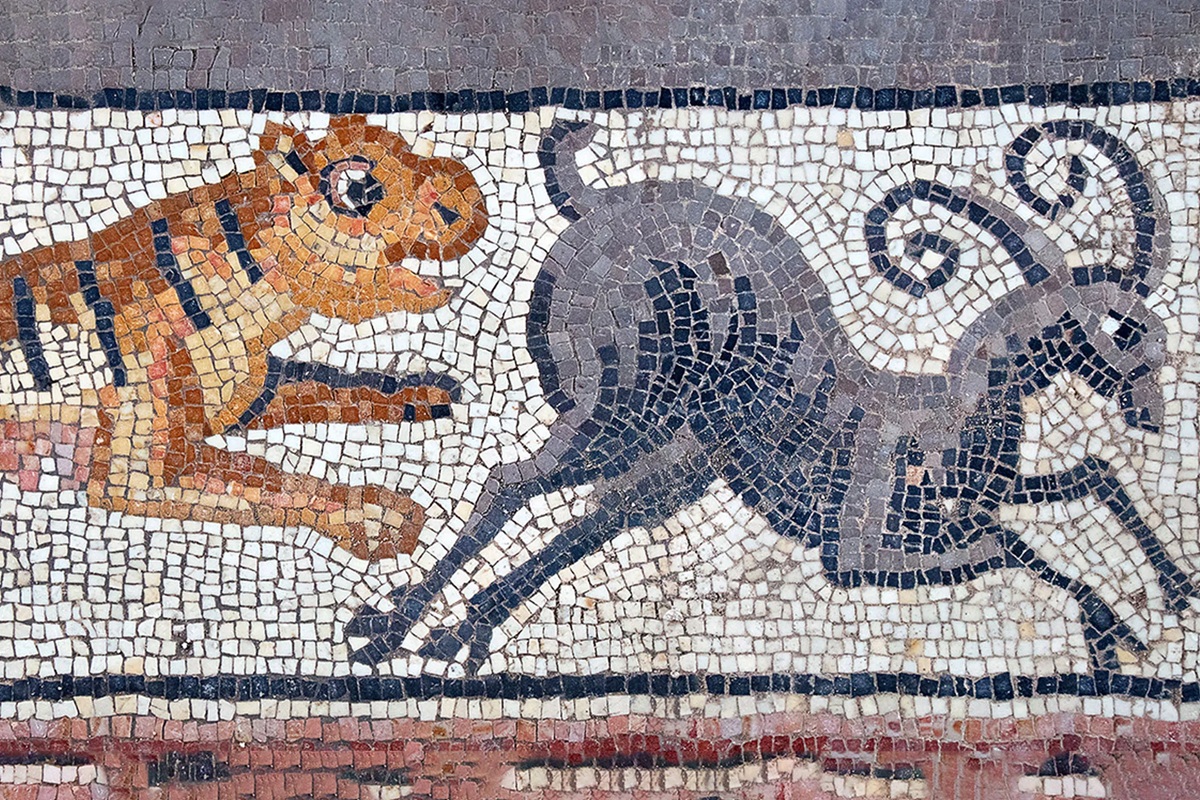
The floor of the reception room is the central element of this discovery. In the centre, two peacocks lean over a bowl, as if drinking water that gives them life. The image, executed with surprising delicacy, evokes associations with symbols of rebirth, immortality and grandeur, values very present in late Roman art. In addition, the motif demonstrates an experienced hand and the full development of the craft tradition.
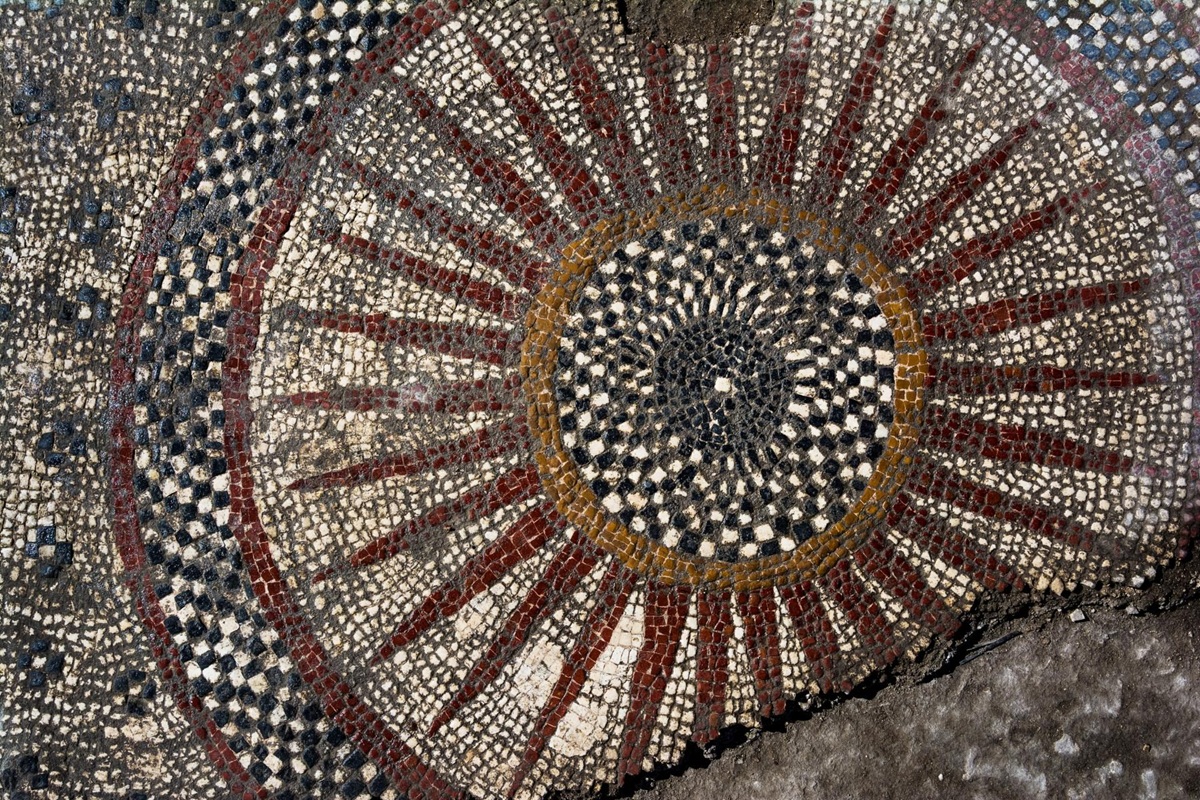
Around this main scene, a series of geometric and ornamental motifs unfolds: a wavy ribbon delimiting the space, an eight-pointed star, Solomon’s knots and patterns that seem to play with repetition, creating a visual rhythm. These elements not only decorate the space, but also dialogue with the symbolic repertoire of the Mediterranean, which in Anatolia acquires its own nuances.
In excellent condition
According to initial assessments, about 80% of the mosaic is in excellent condition. This is surprising for a building that has been underground for more than 1600 years, exposed to time and weather conditions. For archaeologists, each intact area is a visual capsule that allows them to recreate the appearance of the room at the time it was in use.
The discovery of this reception room in Adrianopolis forces us to rethink the historical importance of the settlement. Although it is known for its religious and thermal buildings, the existence of a palace with such exquisite decoration suggests a higher political status than previously thought. The city, located on the northern border of the Roman Empire, was apparently a dynamic centre where local and Mediterranean influences intersected.