
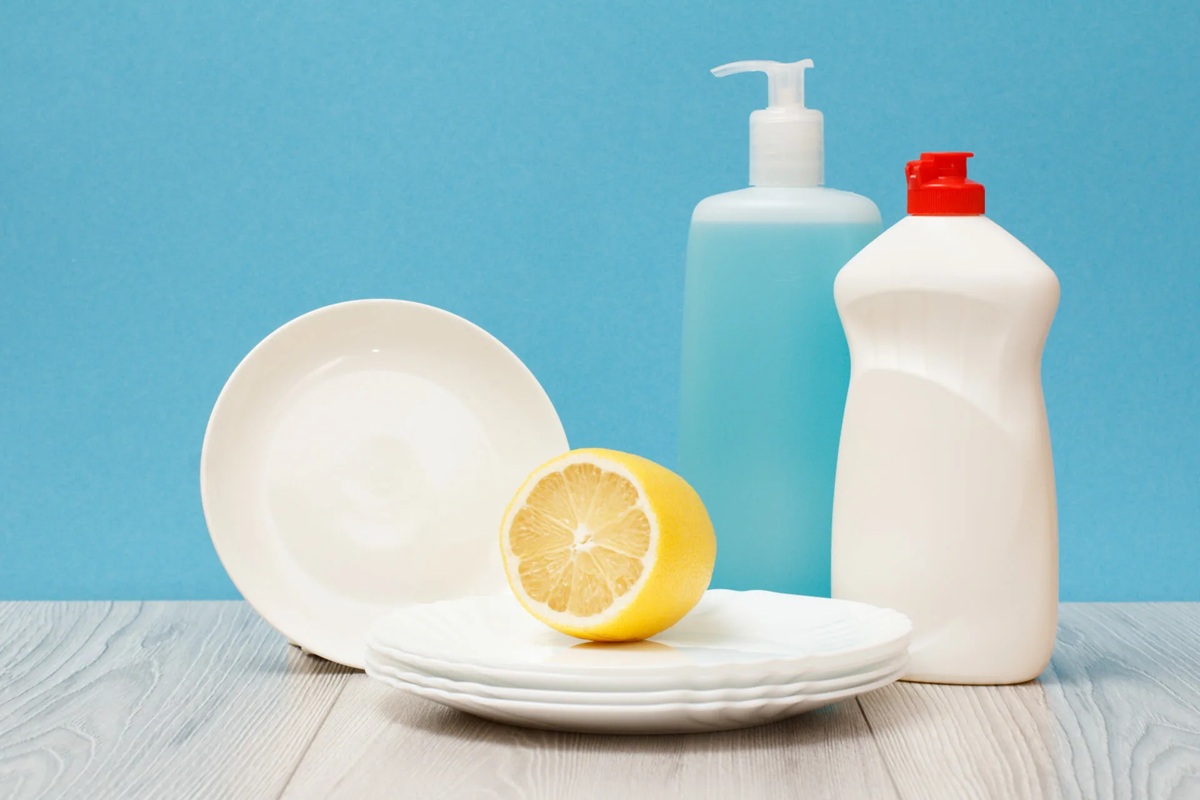

Washing-up liquid is one of those products that can be found in every home and can be used for much more than just washing dishes. Its formula, developed to dissolve grease and remove dirt, makes it the best helper for any household task: whitening clothes, unclogging pipes, cleaning the bathroom, degreasing appliances, and shining floors.
However, although it is a very safe product, it is very important not to mix it with bleach and to always use it in small quantities. Its high degreasing power allows you to easily remove oil, food or dirt residues from any type of surface, from dishes to extractor hoods or worktops.
In addition, it is suitable for cleaning textiles, floors and objects without damaging them or causing discolouration. Added to this is the fact that it is a safe and easy-to-use product with a pleasant aroma, suitable for most household tasks.
1. Whitening sheets and towels
Dishwashing detergent allows you to restore the whiteness of sheets and towels without using bleach. This is because it contains powerful surfactants that remove grease, sweat and other dirt. In addition, it does not contain aggressive bleaches, making it safer for delicate fibres.
- Place the white sheets or towels in the washing machine.
- Add your usual detergent.
- Add a tablespoon of dishwashing detergent directly to the drum.
- Wash in hot water if the fabric allows, or in warm water if not.
2. Cleaning the toilet
Many household cleaning experts recommend putting a little washing-up liquid in the toilet if there is dirt, limescale deposits or surface stains.
- Pour a sufficient amount (two to three tablespoons) into the toilet.
- If you want to intensify the effect, add half a cup of hot water (not boiling) to activate the mixture.
- Leave it to work for 15 to 20 minutes.
- Scrub with a brush.
- Flush the toilet to rinse.
3. The best product for removing grease in the kitchen
Dishwashing detergent is probably one of the best products for removing hardened grease in the kitchen. On extractor hoods, oven doors, trays and stainless steel surfaces, it works even better than some commercial cleaning products. To clean your oven and leave it in perfect condition, just follow these steps:
- Mix dishwashing detergent with baking soda to form a paste.
- Apply to the cool surface.
- Leave on for 30 minutes.
- Remove with a damp cloth.
4. Removing stains from clothing
Dishwashing detergent is one of the most powerful homemade stain removers for clothing, especially for recent stains from oil, greasy cosmetics, oil or sauces.
- Apply a drop directly to the stain.
- Rub gently with your fingers or a soft brush.
- Leave it on for 10 minutes.
- Wash the item as usual.
5. Cleaning the floor
Although not recommended for wooden or parquet floors, dishwashing detergent can be a very effective cleaner for hard floors: it removes grease, shoe marks and ingrained dirt, leaving the surface shiny and streak-free. The ideal mixture: 5 litres of warm water, 1 teaspoon of washing-up liquid and a little vinegar to add shine. It is very important not to exceed the recommended amount, as too much soap can make the floor slippery or leave dull marks.
6. Cleaning the sink
If the drain is not working well but is not completely blocked, washing-up liquid can be an effective and safe remedy before resorting to more aggressive chemicals.
- Pour half a cup of washing-up liquid into the drain.
- Leave it to work for 5 minutes.
- Add 1 litre of very hot water (not boiling, if the pipes are old).
7. Cleaning furniture and outdoor surfaces
Dishwashing detergent is ideal for cleaning garden furniture, plastic tables, outdoor blinds or even PVC surfaces: resin or plastic furniture, roller blinds, air conditioners and external windows.
- Mix a tablespoon of dishwashing detergent with a litre of warm water.
- Scrub with a sponge or cloth.
- Rinse with clean water.
- The result is usually surprising, especially on surfaces where dirt from the environment, smoke or street dirt accumulates.