
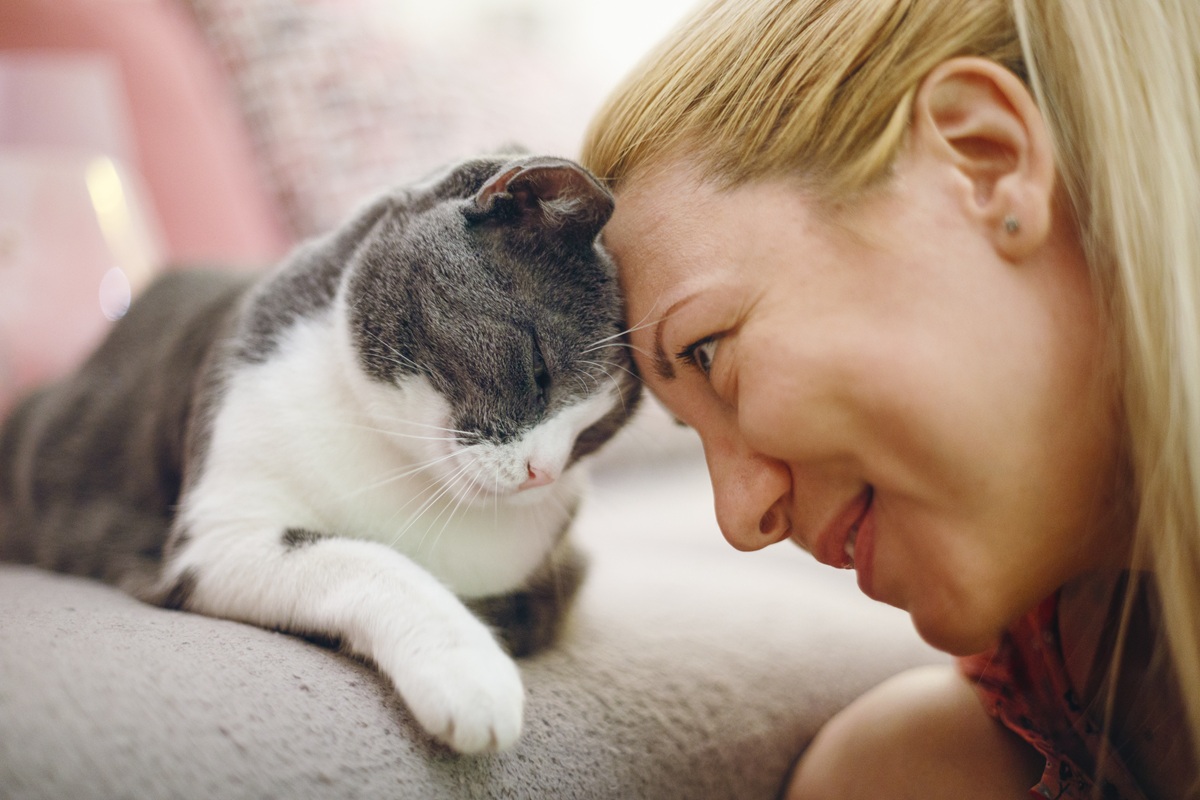

A feline headbutt should not be returned with another headbutt; it is better to respond with gentle strokes and calm gestures.
Cat owners and those who live with cats are familiar with this peculiar gesture, in which the cat tilts its head decisively and rests it, or even bumps it, against our forehead, hand or leg. From the outside, it might seem like an impromptu greeting, and those who live with cats often instinctively interpret it as a gesture of affection. Although this is partly true, its real meaning is deeply connected to the way cats communicate, form bonds and organise the world through smell.
This behaviour is one of the most interesting social expressions of the feline species. Cats have scent glands distributed across their foreheads, cheekbones, the edges of their lips and just in front of their ears, which secrete pheromones. We cannot perceive them, but for cats they are an emotional map that tells them who is who, which spaces are safe and which bonds are active in their social group, a concept that is much more flexible than traditionally thought. When a cat headbutts us, this whole communication system comes into play, and understanding it allows us to better interpret how it relates to us.
A feline greeting that builds trust
One of the most common reasons for headbutting is simply to say hello. For a confident cat, rubbing its head against another individual, whether human, feline or another familiar animal, is a way of initiating friendly contact. It is a deliberate approach that, in cat language, opens the door to peaceful social interaction. In shelters and controlled colonies, this behaviour often occurs between individuals who have already established a bond or are beginning to build one.
In humans, this greeting is usually accompanied by a relaxed body, half-closed eyelids, soft purring or even a slight turn to the side, signals that reinforce the friendly meaning of the gesture. When the interaction occurs with a stranger, for example, a newly adopted cat, it also serves to gather information, and that first facial contact allows them to pick up our scent, integrate it into their memory and decide to what extent we are a safe presence.
The power of smell: creating a group scent
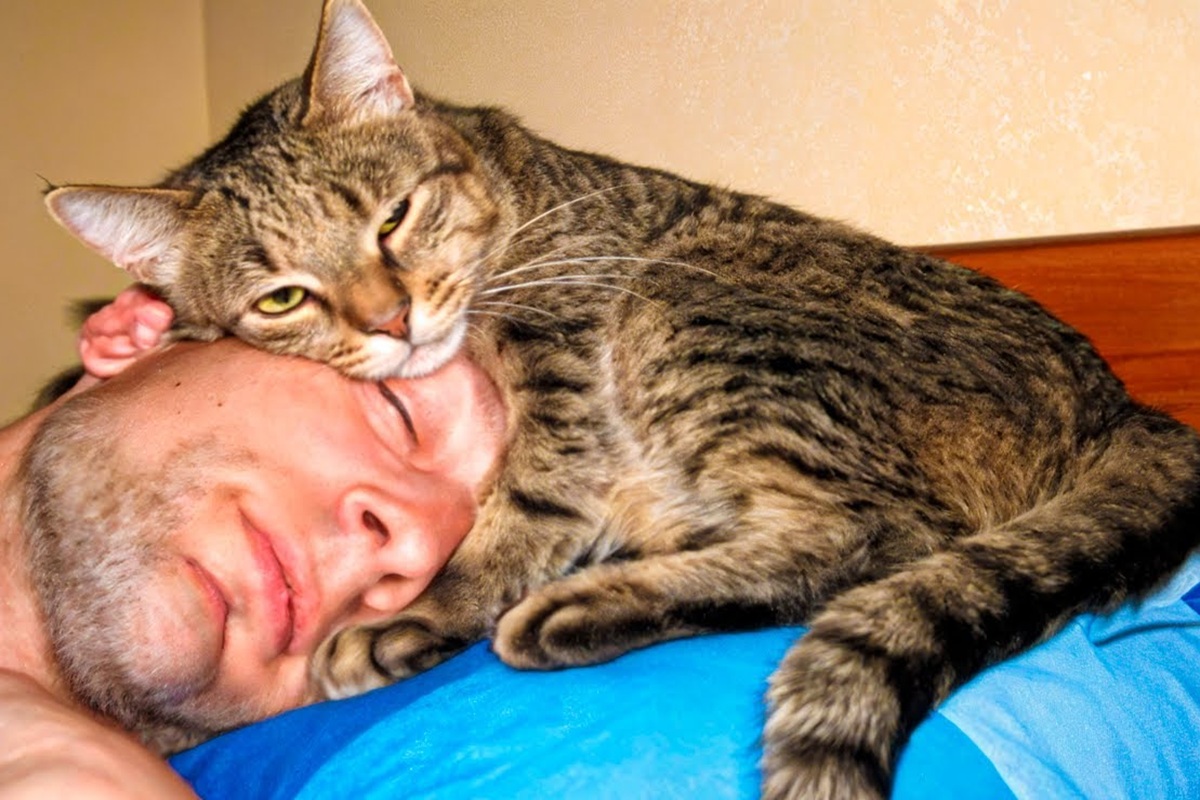
The headbutt also plays a key role in social cohesion. Cats that live together or are part of the same colony mix their scents to create a common scent that identifies them as a social group. It is a simple but effective cooperation strategy, where whoever smells like the family belongs to it. When a cat marks us with its pheromones, it is literally including us in that intimate circle.
Animal Lovers Newsletter
We love animals and want them to be happy. If you live with them, in this newsletter you will find all kinds of recommendations and information so that you can share a fulfilling life together.
This mixture of scents has nothing to do with aggressive territorial marking such as urine spraying, but is rather an emotional seal. In a home, that shared scent helps the cat feel safe, because it recognises a familiar and reassuring trace on objects, people and other animals. For many people, realising that a headbutt means “I accept you into my clan” completely changes their interpretation of the gesture.
Self-comfort and emotional regulation
But headbutts are not always directed at humans. Cats also rub their heads against furniture, corners or door frames when they are calm, content or in exploration mode. This action, repeated unhurriedly and accompanied by purring or gentle tail movements, acts as a mechanism of self-comfort by releasing pheromones that help them regulate themselves and reinforce the feeling that their environment is safe.
This self-regulating use is reminiscent of other behaviours that serve similar functions, such as kneading with their paws. It’s not that the cat is asking for something at that moment, it’s simply enjoying the sensory experience of rubbing its head and the well-being produced by its own facial pheromones.
When they seek our attention
Headbutting can also have a very practical purpose, which is to get attention. A cat that approaches us, looks at us and then headbutts us may be saying “here, pay attention to me”. In many cases, they just want to be stroked on the head or under the chin, which are particularly sensitive and pleasurable areas for them. But in other cases, the sequence continues with a determined walk towards the food bowl or the place they want to show us. And if after each headbutt they get the response they want, whether it’s a stroke, a gesture, or a satisfying interaction where they feel understood, it’s logical that the behaviour will be reinforced.
For very trusting cats, this form of “touching to ask” can become a daily ritual, an exchange that, over time, further strengthens the bond with their human reference point.
Not all cats do it
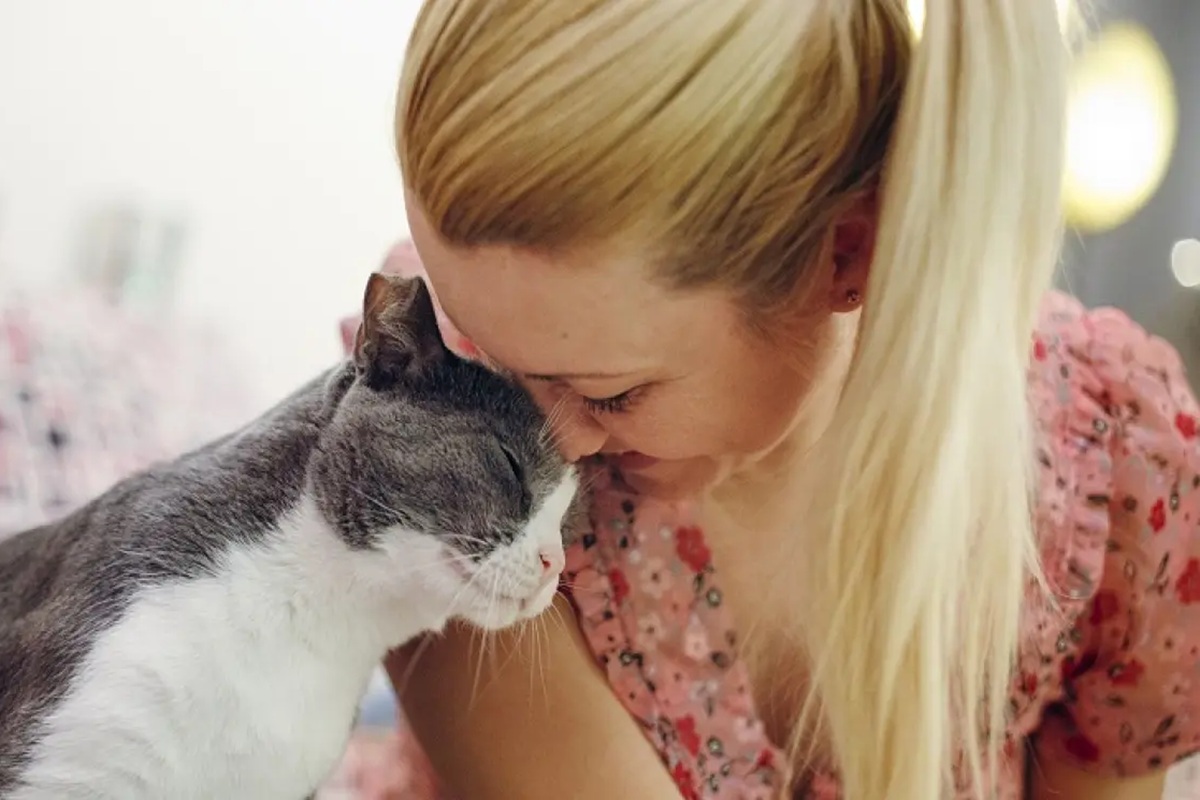
Although it is a well-known and common behaviour, it should be noted that not all cats do it, and the absence of headbutts does not mean a lack of affection. As with vocalisations, play or physical contact, individual preferences carry a lot of weight. More confident and sociable cats tend to headbutt more, and within groups that live together, it is usually the dominant cat, or simply the most confident one, who initiates the exchange of scents.
If a cat that previously head-butted suddenly stops doing so, then it is worth paying attention to the context. Sudden changes in social patterns can indicate discomfort or an incipient illness, especially if accompanied by lethargy or irritability. In such cases, it is advisable to consult a veterinary surgeon.
Head pressing, a neurological disorder
It is important to distinguish head butting from the neurological disease head pressing, a serious condition in which the cat presses its head against a wall or object without apparent relaxation. It is often accompanied by disorientation, movement disturbances or behavioural changes, and may be a sign of a neurological problem. It has nothing to do with social head butting. If it occurs, it requires immediate veterinary attention.
How should we react to a feline headbutt?
The ideal response is gently. A headbutt is not an invitation to return the blow with your forehead; in fact, most cats would not like that at all. Rather, it is a gesture that we can respond to with head strokes, slow hand movements or a moment of positive interaction. Keeping the environment calm and respecting the cat’s boundaries helps to ensure that this ritual remains pleasant for both parties.
In short, when a cat headbutts us, it is communicating in a deeply feline way that combines bonding, our scent, emotional memory and a touch of strategy. It is their way of saying that we are part of their world.