


The device, developed by the Weizmann Institute, promises to accelerate the development of therapies, ensure accurate immunological testing, and enable instant adaptation to the emergence of new viruses In 2020, as scientists around the world rushed to understand COVID-19, Professor Roy Bar-Ziv and his team at the Weizmann Institute began developing a DNA chip that could not only quickly show how our immune system reacts to this coronavirus, but also open up new possibilities for a rapid response to future viral outbreaks.
The cell-free, genetically programmed biochip, recently described in Nature Nanotechnology, can rapidly synthesise, map and analyse proteins, allowing us to determine how antibodies interact with viruses. It provides data faster than traditional methods and shows which viral fragments are targeted by antibodies and how strongly they bind to them. ‘During the pandemic, we realised that the tools developed by our laboratory could be reused to research viruses and become immediately relevant.’
Studying the immune system’s reaction to the virus is a more complex task than a rapid diagnostic test that shows whether a person is infected with that virus. To understand which antibodies recognise the virus and how strongly they bind to it, researchers usually produce each viral protein separately, purify it, and then analyse it with antibodies, which can take days or even weeks. Some laboratories use miniaturised liquid channels that speed up testing, but these facilities are complex and require precise pumps and tubes.
The biochip created by Bar-Ziv’s team offers a much simpler way to perform the tests. This method requires no pumps or tubes and can be quickly adapted to a new virus. Its development was led by Dr Shirley Dauber, senior researcher, together with Dr Aurora Dupin and Dr Ohad Wonshak from Bar-Ziv’s laboratory in the Department of Chemical and Biological Physics at the Weizmann Institute.

The use of the biochip does not require ready-made proteins; they are synthesised by the chip directly on its own silicon surface. Each section of the chip contains a small fragment of printed DNA, containing genetic instructions for a specific viral protein or protein fragment, such as those belonging to different variants of the coronavirus, including different versions of its outer spike and inner layer. When researchers add an acellular mixture of biological molecules that are normally found inside cells, this DNA is translated directly into the corresponding protein.
Each biochip can produce between 30 and 40 viral proteins or fragments. It uses approximately one microlitre of serum (less than a drop) to identify a person’s immune fingerprint across dozens of viral targets or antigens. Because each antigen is in a different location on the chip, the team can separately measure the amount of antibodies that bind to each one. ‘We don’t need to grow or purify anything in advance; each spot on the chip produces its own protein or protein fragment,’ says Dupin. ‘With dozens of these antigens on a single chip, we can analyse many of them simultaneously, in a single experiment, instead of performing separate tests for each one.’
Based on the interactions between these proteins and antibodies, researchers can determine the binding strength, or affinity, i.e., how strongly the antibody binds to its target. A stronger bond generally means a more effective immune defence. ‘Measuring how strongly each antibody binds to its target gives us quantitative results, rather than just a yes or no answer,’ explains Wonshak. The team compared the data from their biochip with standard ELISA (enzyme-linked immunosorbent assay) results on human serum samples. They found that their chip often detected antibody activity that standard ELISA tests did not detect, indicating that traditional tests can sometimes miss more subtle antibody reactions.
The team used this setup to evaluate the interaction between COVID-19 proteins and human antibodies against the virus. ‘We observed very unique immune signatures in each person,’ said Bar-Ziv. “Some people had antibodies against the original Wuhan variant, but not against the Delta or Omicron variants. Because the chip helps us deeply understand different people’s reactions to the virus, we can also determine whether changes in the new variant can reduce the effectiveness of their antibodies.‘ In the future, the same approach could be used to study antibodies against other viruses or to develop new treatments. ’Many modern medicines are based on antibodies,” explained Daube. ‘If the antibody binds perfectly to the virus, it can block infection. Our system can be used to find these candidates more quickly.’
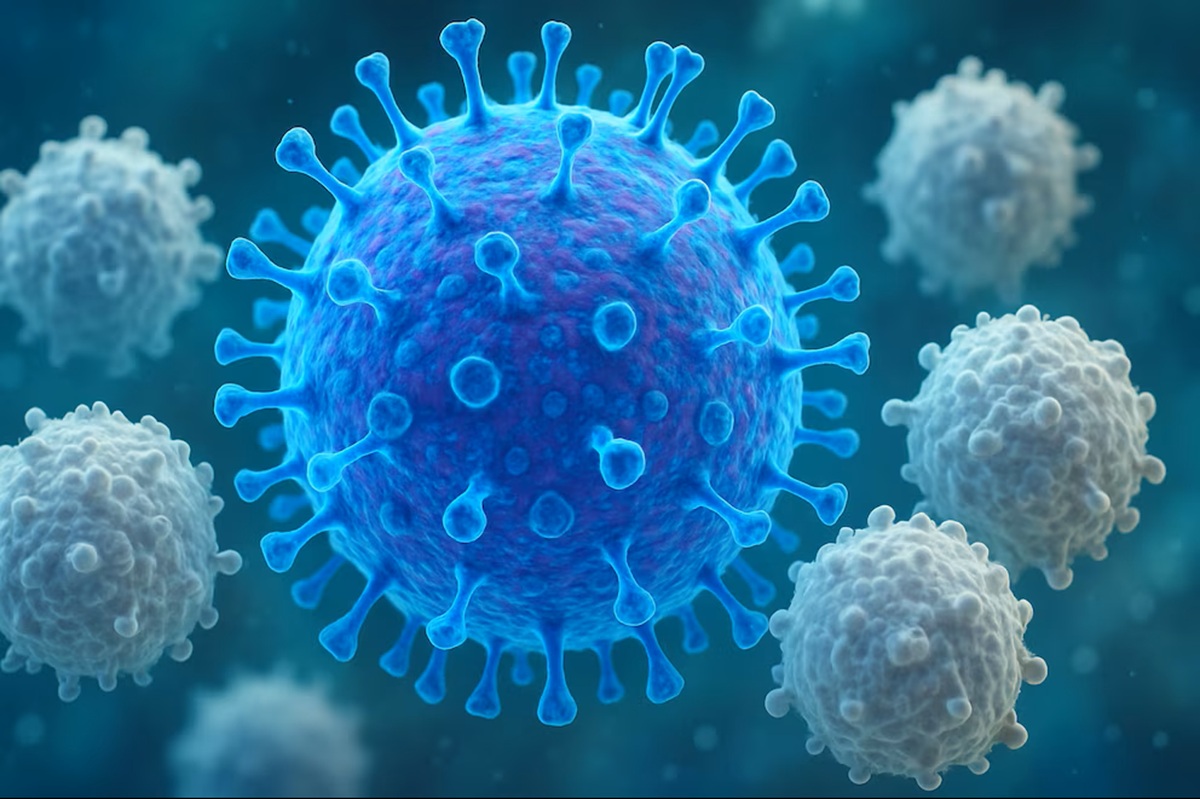
To demonstrate the chip’s potential, the team recreated the interaction between the coronavirus spike protein and its human ACE2 receptor, which allows the virus to enter human cells. Both the spike protein and the receptor were produced on the chip and bound specifically to each other. This suggests that the platform can be used to evaluate potential therapies directly on the chip by adding antibodies or other drug candidates that block this binding. If the signal weakens, it means that the antibody is preventing the virus from binding to the receptor.
‘Our chip opens up the possibility of testing the interaction of viruses with human receptors and looking for ways to block these interactions with new treatment methods,’ says Bar-Ziv. The team is initiating a collaboration with Sheba Medical Centre to monitor the immune response in COVID-19 patients in real time using the new chip. By linking antibody data to patients’ medical histories, they hope to identify patterns of immunity that could guide the development of future vaccines.
Artificial intelligence is the next step. ‘We can use the chip to analyse computer-designed antibody sequences and test their properties in a very short time frame,’ said Bar-Ziv. ‘The chip can speed up and increase the accuracy of the AI design process.’ Bar-Ziv envisions a future in which this tool will enable real-time responses to the pandemic. ‘If a new outbreak emerges tomorrow, we can take the genetic sequence of that virus, create its proteins on the chip, and immediately analyse the antibodies. It’s an incredibly powerful tool for preparedness.’