
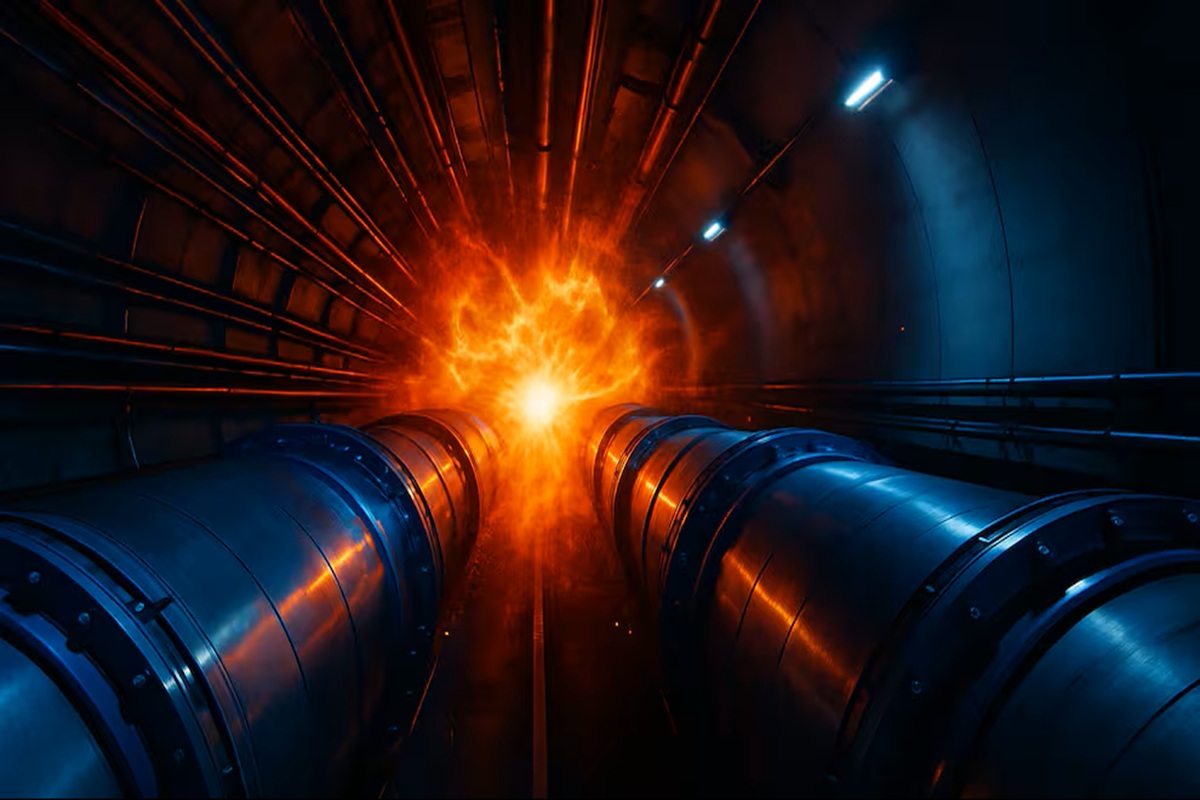

A monumental project is advancing in Europe and promises to open a new stage in understanding the profound structure of the Universe. Discover all the details. Europe is evaluating a work considered the most important in the history of science, designed to replicate circumstances similar to the Big Bang. The plan aims to overcome the current limits of physics and expand knowledge about the origin of the universe and matter. The technical and financial magnitude of the project is already generating global impact. Although its feasibility is still under discussion, international interest is growing due to its scope and the path it may follow in the coming decades.
What project are they building and how do they intend to replicate the power of the Big Bang?
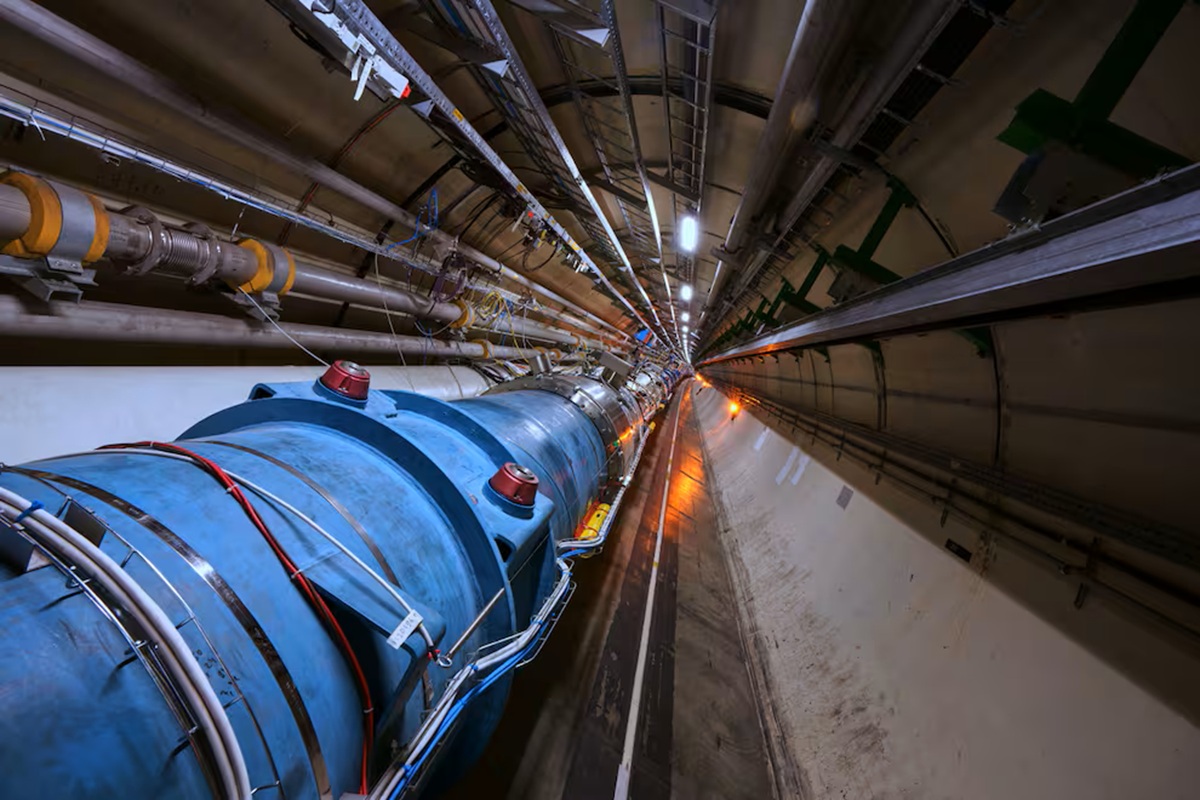
The European Organisation for Nuclear Research (CERN) is promoting the Future Circular Collider (FCC), a mega-accelerator that will far exceed the Large Hadron Collider. The project envisages a 91-kilometre circular tunnel, capable of reaching energies eight times greater and recreating conditions similar to those of the Big Bang.
The project will be developed in two stages: first, a ‘Higgs factory’ around 2045 to produce large quantities of Higgs bosons, the elementary particle that gives mass to other fundamental particles. This initial stage will allow for a more accurate study of its behaviour and its role in the structure of the Universe.
Then, around 2070, the main collider, based on proton collisions at extreme energies, would come into operation. With this level of power, physicists hope to detect particles not yet observed and make progress on outstanding puzzles, such as the nature of dark matter.
Key points of the project
- 91 km underground tunnel on the border between Switzerland and France.
- Estimated investment of over US$ 30 billion.
- First stage: Higgs factory.
- Second stage: proton collider.
Why is it controversial and what will be the impact on the global scientific community?
The FCC divides the scientific community. Some researchers argue that it will shape the future of physics; others warn about its duration, its cost and the possibility of absorbing resources intended for alternative technologies, such as linear colliders or advanced accelerators.
Added to this is financial uncertainty. Germany has already signalled that it will not increase its contribution, and other member countries are calling for clarity on the final costs. At the same time, China is considering approving a similar electron-positron collider, which could change the international leadership in particle research.